
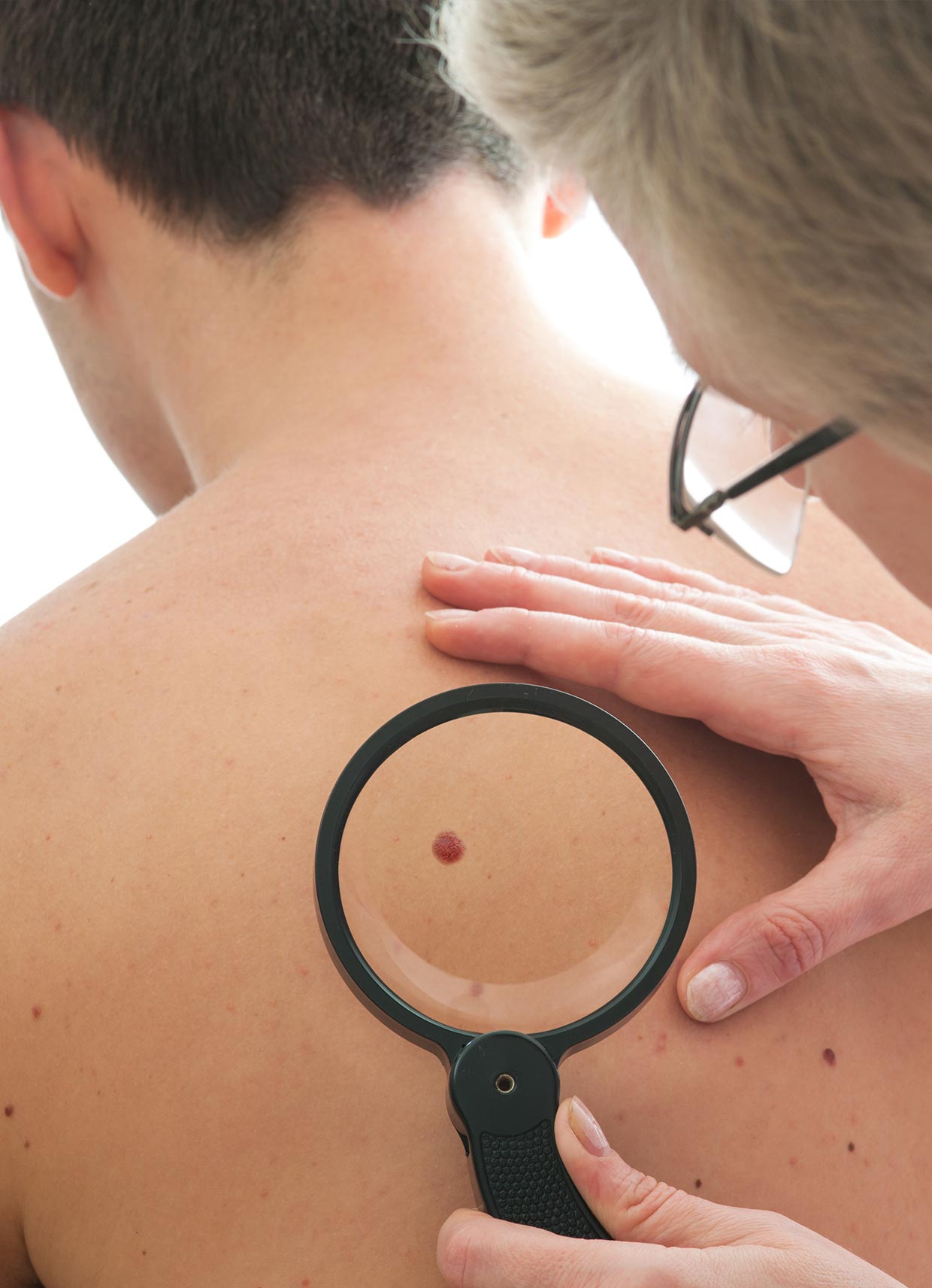
Skin cancer screening

What is skin cancer?

Skin cancer is one of the most common types of cancer worldwide and develops when skin cells grow uncontrollably. There are several types, including basal cell carcinoma, squamous cell carcinoma and malignant melanoma. Early detection and treatment are essential for successful recovery.

Risk factors for skin cancer

Skin cancer is primarily caused by excessive exposure to UV radiation from the sun or tanning beds. Other risk factors include fair skin, a high number of moles, a family history of skin cancer and a weakened immune system.

Symptoms of skin cancer

Skin cancer may appear as changes in the skin, wounds that do not heal or unusual moles. The ABCDE method (asymmetry, border, colour, diameter and evolution) helps identify suspicious skin changes.

Treatment options

Treatment for skin cancer may include surgery, radiotherapy, chemotherapy and immunotherapy. The most suitable treatment depends on the type and stage of the skin cancer.

Types of skin cancer

There are three main types of skin cancer:

  • Basal cell carcinoma (BCC): The most common type, usually caused by UV exposure. BCC grows slowly and rarely spreads to other parts of the body.

  • Squamous cell carcinoma (SCC): Also associated with UV exposure, this type often develops on areas of skin exposed to the sun and can spread to other parts of the body.

  • Malignant melanoma: The most dangerous type of skin cancer, known for its potential to spread rapidly. It can develop from an existing mole.

Why is skin cancer screening important?

Skin cancer screening is essential for early detection and treatment. Early diagnosis improves the chances of successful recovery and reduces the risk of serious complications.

Skin cancer screening methods

  • Self examination: Regularly checking your skin for changes.

  • Dermatological examinations: Annual skin cancer screenings performed by a dermatologist.

  • Digital skin screening: Advanced technology for the detailed examination and documentation of skin changes.

Protective measures

Use sunscreen with a high sun protection factor daily, wear protective clothing and avoid direct sun exposure. Avoid tanning beds and maintain a healthy skincare routine.

Book an appointment